Imagine standing at a crossroads after Class 12, knowing that one decision can shape your future.
Every aspiration, whether developing intelligent AI solutions, designing advanced machines, creating innovative software, or building next-generation communication systems, begins with the right direction.
In today’s technology-driven world, engineering is about innovation, creativity, and solving real-world challenges.
B.Tech Courses at GL Bajaj Institute combine experienced faculty, modern laboratories, practical learning, industry exposure, and strong placement support to help students develop the technical expertise and professional skills needed for successful careers in the ever-evolving engineering industry.
B.Tech Courses: The First Step Towards an Engineering Career
A Bachelor of Technology (B.Tech) is a four-year undergraduate engineering program that combines classroom learning with practical training, laboratory sessions, industry projects, and internships.
Spread across eight semesters, the curriculum helps students build strong technical knowledge while developing problem-solving, communication, teamwork, and leadership skills.
Today’s engineering education goes beyond textbooks. Students gain hands-on experience through live projects, industrial visits, technical competitions, internships, and innovation-driven learning.
This practical approach prepares graduates to meet industry expectations with confidence.
With multiple specializations available, students can select a program that aligns with their interests and career aspirations.
Each branch offers distinct learning opportunities, emerging technology exposure, and excellent career prospects across diverse industries.
Why B.Tech Continues to Be a Smart Career Choice
Engineering remains one of the most trusted career options because it provides knowledge, practical skills, and opportunities across multiple industries.
Engineers contribute to innovations in healthcare, transportation, finance, manufacturing, communication, renewable energy, and information technology.
Some key benefits of pursuing B.Tech Courses include:
- Wide range of career opportunities across industries
- High demand for skilled engineers in India and abroad
- Strong foundation for higher education and research
- Opportunities in government and private sectors
- Exposure to innovation, entrepreneurship, and technology
- Continuous learning through emerging technologies
- Competitive salary potential with career growth
As businesses increasingly rely on digital transformation, automation, and intelligent systems, engineering graduates with updated technical skills remain valuable to employers.
Why Choose GL Bajaj for B.Tech Courses?
Selecting the right institution is as important as selecting the right engineering specialization.
GL Bajaj Institute of Technology & Management offers an academic environment that supports both personal and professional growth.
Industry Oriented Academic Environment
The curriculum is designed to bridge the gap between theoretical knowledge and practical application.
Students gain hands-on experience through laboratory sessions, industrial projects, workshops, and technical events that reflect current industry practices.
Experienced Faculty
Learning from experienced faculty members helps students understand engineering concepts in greater depth.
Faculty members guide students through academic projects, research activities, innovation challenges, and professional development initiatives.
Modern Infrastructure
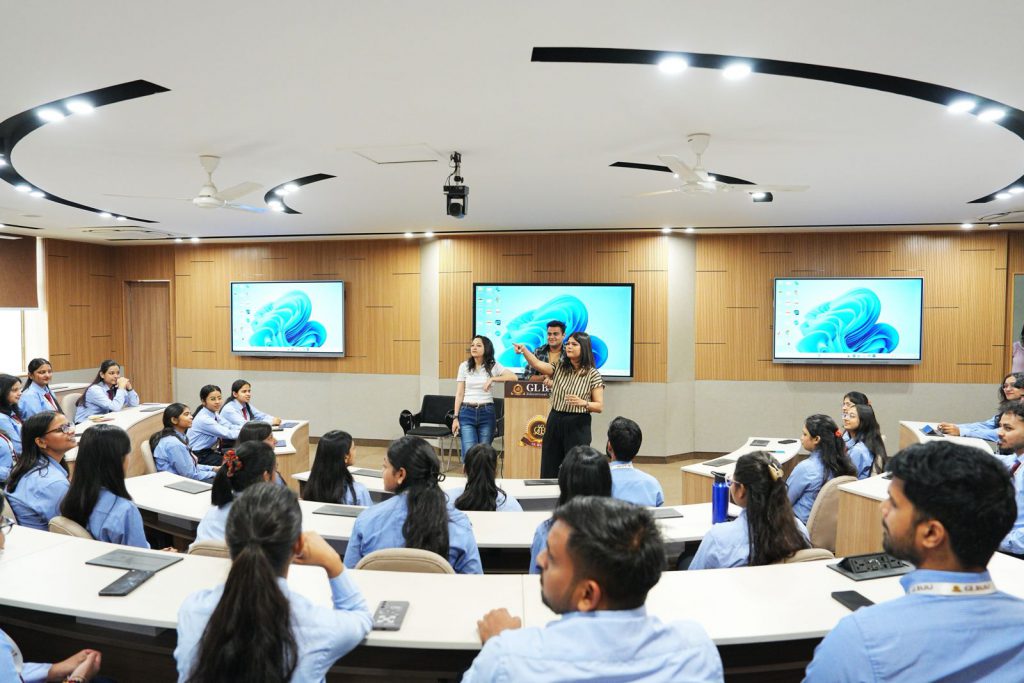
GL Bajaj provides smart classrooms, advanced laboratories, innovation spaces, computer centers, libraries, seminar halls, and collaborative learning environments that support effective education.
Research and Innovation
Students are encouraged to participate in research projects, technical competitions, hackathons, and innovation activities.
These experiences help develop creativity, analytical thinking, and problem-solving abilities.
Industry Exposure
Industry interaction is an important part of engineering education.
Through guest lectures, industrial visits, expert sessions, internships, and collaborative activities, students gain insights into current technologies and workplace expectations.
Skill Development
Beyond technical education, students receive training in communication, aptitude, leadership, teamwork, presentation skills, and interview preparation to enhance their employability.
Placement Support
Dedicated placement preparation includes coding practice, aptitude development, mock interviews, resume building, soft skills training, and interaction with recruiters.
This structured approach helps students prepare confidently for campus recruitment opportunities.
GL Bajaj offers engineering programs that address both traditional engineering disciplines and emerging technology domains.
B.Tech Courses Offered at GL Bajaj
| B.Tech Course | Major Learning Areas |
| Computer Science and Engineering (CSE) | Programming, Software Development, Algorithms |
| CSE (Artificial Intelligence) | Artificial Intelligence, Robotics, NLP |
| CSE (AIML) | Machine Learning, Deep Learning, Predictive Analytics |
| CSE (Data Science) | Big Data, Analytics, Cloud Computing |
| Computer Science & Information Technology (CSIT) | Networks, Databases, Cyber Security |
| Electrical and Computer Science | Electrical Systems, Automation, Embedded Systems |
| Electronics and Communication Engineering (ECE) | Communication Systems, VLSI, Embedded Electronics |
| Mechanical Engineering | Manufacturing, Design, Robotics, CAD |
Each specialization combines theory and practical learning to prepare students for industry careers.
How to Choose the Right B.Tech Course
Every engineering specialization has its own strengths and career opportunities. Before selecting a program, students should consider:
- Interests and Strengths: Choose a specialization that matches your skills in mathematics, programming, electronics, or mechanics.
- Career Goals: Select a program that supports your long-term career aspirations and preferred industry.
- Future Technology Demand: Consider specializations aligned with emerging technologies and evolving industry requirements.
- Internships and Projects: Look for opportunities that provide practical exposure through internships and industry-based projects.
- Higher Education: Choose a program that supports advanced studies, research, and professional certifications.
- Industry Learning and Placements: Prefer colleges offering industry-oriented training, skill development, and strong placement support.
Rather than following trends, students should choose a specialization that aligns with their long-term aspirations.
The right decision can create a strong foundation for a rewarding engineering career.
B.Tech Courses: Guide to Engineering Programs for Admission
Everything you need to know about B.Tech Courses for Admission 2026.
Learn about engineering specializations, career opportunities, eligibility, admission process, industry-focused learning, essential skills, and factors to consider before selecting the right program for a successful engineering career.
1. Computer Science and Engineering
The Computer Science & Engineering (CSE) program equips students with strong programming, software development, and problem-solving skills.
It combines theoretical knowledge with practical learning to prepare graduates for successful careers in software engineering, cloud computing, cybersecurity, and other rapidly growing technology domains.
Comprehensive Technical Learning
Students study programming, data structures, algorithms, databases, operating systems, computer networks, cloud computing, cybersecurity, web technologies, and mobile application development.
The curriculum builds a strong technical foundation and prepares students to develop efficient software solutions for real-world challenges.
Practical Learning and Career Opportunities
Students gain practical experience through:
- Programming and Coding Laboratories
- Technical Workshops
- Hackathons and Coding Competitions
- Software Development Projects
- Web and Mobile Application Development
- Industry-Oriented Mini and Major Projects
- Modern Programming Languages
- Latest Development Tools
Practical learning prepares students for careers as Software Engineers, Cloud Engineers, Full-Stack Developers, and Cybersecurity Professionals.
2. Computer Sc. & Engg. (Artificial Intelligence)
The Computer Science & Engineering (Artificial Intelligence) program prepares students for careers in intelligent technologies.
It combines AI concepts with practical learning. Students develop technical skills to build smart systems that solve real-world challenges across industries.
Comprehensive Technical Learning
Students study Artificial Intelligence, Machine Learning, Computer Vision, Natural Language Processing, Robotics, and Intelligent Systems.
The curriculum builds programming, analytical, and problem-solving skills.
It prepares students to develop intelligent applications for modern industries.
Practical Learning and Career Opportunities
Students gain practical experience through:
- AI-Based Projects
- Machine Learning Applications
- Computer Vision Models
- Robotics Experiments
- Natural Language Processing Tasks
- Innovation and Research Activities
- Intelligent System Development
- Industry-Oriented Capstone Projects
Exposure prepares graduates for careers as AI Engineers, AI Consultants, Computer Vision Engineers, Robotics Engineers, Intelligent Systems Developers, and AI Research Professionals.
3. Computer Sc. & Engg. (AIML)
The Computer Science & Engineering (Artificial Intelligence & Machine Learning) program equips students with advanced AI and machine learning skills to develop intelligent systems.
The program combines strong theoretical knowledge with practical learning to prepare graduates for rapidly growing careers in artificial intelligence and automation.
Comprehensive Technical Learning
Students study Deep Learning, Neural Networks, Machine Learning, Predictive Analytics, Data Modeling, Reinforcement Learning, and Intelligent Algorithms.
The curriculum develops the knowledge and technical expertise required to build AI-powered applications, automate processes, and create data-driven solutions for real-world industry challenges.
Practical Learning and Career Opportunities
Students gain hands-on experience through Machine Learning projects, Deep Learning model development, recommendation systems, image recognition, speech processing, predictive analytics, and AI-based capstone projects.
Practical learning equips students with industry-ready skills for careers as Machine Learning Engineers, AI Developers, Data Engineers, Computer Vision Engineers, NLP Engineers, AI Researchers, and Intelligent Systems Specialists in leading technology organizations.
4. Computer Sc. & Engg. (Data Science)
The Computer Science & Engineering (Data Science) program prepares students to transform data into meaningful insights using modern analytical tools and technologies.
It combines programming, statistics, and business intelligence with practical learning to develop industry-ready professionals for data-driven careers.
Comprehensive Technical Learning
Students study Python, SQL, Data Analytics, Big Data Technologies, Cloud Computing, Data Visualization, Statistics, and Business Intelligence.
The curriculum helps students collect, organize, analyze, and interpret large datasets while developing the technical and analytical skills needed to solve real-world business and technology challenges.
Practical Learning
Students gain hands-on experience through:
- Python Programming Projects
- SQL and Database Management Labs
- Data Analytics and Visualization Tools
- Big Data Technology Platforms
- Cloud Computing Applications
- Statistical Analysis Exercises
- Business Intelligence Projects
- Real-World Dataset Analysis
Career Opportunities
Graduates can pursue careers as Data Scientists, Data Analysts, Business Intelligence Engineers, Analytics Consultants, Data Engineers, and other data-focused professionals across technology companies, financial institutions, healthcare organizations, consulting firms, and research organizations.
5.Computer Sc. & Information Technology
The Computer Science & Information Technology program combines software development with modern IT infrastructure and enterprise technologies.
It equips students with technical expertise, practical experience, and industry-relevant skills to build, manage, and secure digital systems for evolving business and technology environments.
Comprehensive Technical Learning
Students study networking, cloud computing, database management, cybersecurity, operating systems, and enterprise applications.
The curriculum integrates software development with IT infrastructure, enabling students to understand modern computing environments, manage digital systems, and develop efficient technology solutions for organizations across various industries.
Practical Learning
Students gain hands-on experience through:
- Networking Laboratories
- Cloud Computing Platforms
- Database Management Projects
- Cybersecurity and Ethical Hacking Exercises
- Operating Systems Laboratories
- Enterprise Application Development
- Network Configuration and Administration
- Industry-Oriented Mini and Major Projects
6. Electrical and Computer Science
The Electrical and Computer Science program combines electrical engineering with modern computing technologies to prepare students for smart and connected industries.
It develops technical knowledge, practical skills, and problem-solving abilities for careers in automation, embedded systems, intelligent computing, and advanced electrical technologies.
Comprehensive Technical Learning
Students study electrical systems, embedded systems, automation, Internet of Things (IoT), control systems, and intelligent computing.
The curriculum combines hardware and software concepts, helping students understand how modern technologies work together to create smart devices, automated solutions, and efficient electrical systems for various industries.
Career Opportunities and Industry Scope
The interdisciplinary program prepares graduates for careers in automation, embedded systems, and electrical design.
Students can pursue roles such as Automation Engineer, Embedded Systems Engineer, Control Systems Engineer, and Electrical Design Engineer while contributing to industries focused on smart technologies, industrial automation, and intelligent electrical solutions.
7. Electronics and Communication Engineering
Electronics and Communication Engineering (ECE) focuses on designing, developing, and improving electronic devices, communication systems, embedded technologies, and semiconductor applications.
The program combines theoretical knowledge with practical learning, enabling students to build technical expertise and prepare for careers in rapidly growing industries driven by innovation and advanced communication technologies.
Industry Focused Learning and Practical Training
The Electronics and Communication Engineering program provides students with practical exposure through well-equipped laboratories, live projects, workshops, and internships.
The curriculum covers digital electronics, communication systems, embedded systems, VLSI design, microprocessors, IoT, and signal processing.
Students gain hands-on experience using industry-relevant tools while developing analytical, technical, and problem-solving skills required to meet modern engineering and technology challenges.
Career Opportunities and Future Scope
Electronics and Communication Engineering graduates have diverse career opportunities in telecommunications, semiconductor manufacturing, consumer electronics, automation, healthcare technology, aerospace, and defence industries.
They can work as Electronics Engineers, Embedded Systems Engineers, VLSI Engineers, Network Engineers, IoT Engineers, and Communication Engineers.
Growing technologies such as 5G, artificial intelligence, robotics, and smart devices continue to create strong demand for skilled ECE professionals worldwide.
8. Mechanical Engineering Department
Mechanical Engineering is one of the most versatile B.Tech specializations, combining engineering fundamentals with advanced manufacturing technologies.
The program develops technical expertise, practical skills, and innovative thinking, preparing students to solve industrial challenges and build successful careers across diverse engineering and manufacturing sectors.
Industry Focused Curriculum
The Mechanical Engineering Department offers one of the most versatile B.Tech courses by combining strong engineering fundamentals with modern manufacturing technologies.
Students gain knowledge in design engineering, manufacturing processes, robotics, thermal engineering, industrial automation, CAD, CAM, and quality engineering.
The curriculum prepares students to solve real-world engineering challenges while developing the technical skills required by today’s manufacturing and industrial sectors.
Practical Learning and Career Opportunities
Students gain practical experience through workshops, laboratories, and project-based learning.
Hands-on training in manufacturing, machine design, and automation develops technical skills and prepares graduates for careers in automobile, aerospace, robotics, manufacturing, energy, and industrial engineering sectors.
Industry Oriented Curriculum at GL Bajaj
One of the biggest advantages of pursuing B.Tech Courses at GL Bajaj is the strong emphasis on practical learning and industry readiness.
The curriculum is regularly updated to match evolving technologies and current industry demands.
Students gain hands-on experience through modern laboratory sessions, mini and major projects, capstone projects, industry assignments, and technical workshops.
The institute also promotes outcome-based education, innovation-driven learning, and collaborative problem-solving activities.
This practical approach enables students to strengthen their technical skills, improve critical thinking, and confidently apply classroom concepts to solve real-world engineering and technology challenges.
Modern Laboratories and Research Facilities
Practical learning is an essential part of engineering education at GL Bajaj.
The institute provides modern, well-equipped laboratories that encourage experimentation, innovation, and hands-on technical learning.
Students gain practical exposure through Computer Programming Labs, Artificial Intelligence Labs, Machine Learning Labs, Data Science Laboratories, Networking Labs, Electronics Laboratories, Electrical Engineering Labs, Mechanical Workshops, Robotics and Automation Labs, and Innovation & Project Development Centers.
These advanced facilities help students build practical skills, conduct experiments, and prepare for real-world engineering challenges.
Industry Certifications for Career Growth
Technical certifications help students build industry-relevant skills and improve their employability.
Along with academic learning, students are encouraged to earn certifications in emerging technologies, including:
- AWS Cloud Computing
- Microsoft Technologies
- Cisco Networking
- Oracle Database
- Google Cloud
- Python Programming
- Artificial Intelligence
- Machine Learning
- Cybersecurity
- Data Analytics
These certifications strengthen technical knowledge, validate practical skills, and help students stay aligned with industry expectations, making them more confident and job-ready for diverse career opportunities.
Practical Learning and Career Preparation
Engineering education becomes more valuable when learning goes beyond the classroom.
Internships, industrial training, and live projects help students apply theoretical concepts in real work environments.
Expert lectures, industrial visits, startup interactions, and innovation competitions further enhance practical knowledge and industry awareness.
Career preparation is equally important.
Students strengthen their skills through aptitude training, coding practice, resume building, technical interview preparation, and mock interviews.
Group discussions, communication sessions, personality development, leadership training, and career guidance build confidence and prepare graduates for successful campus placements and professional careers.
Career Opportunities After Different B.Tech Courses
Engineering specializations open diverse career opportunities across rapidly growing industries and emerging technologies.
| B.Tech Specialization | Career Roles | Key Industries |
| Computer Science and Engineering | Software Engineer, Full Stack Developer | IT, Software Development |
| CSE (Artificial Intelligence) | AI Engineer, Robotics Engineer | AI, Healthcare, Finance |
| CSE (AIML) | Machine Learning Engineer, AI Developer | Analytics, Automation |
| CSE (Data Science) | Data Scientist, Data Analyst | Banking, Retail, IT |
| Computer Science & Information Technology | Cloud Engineer, Network Engineer | Cloud Computing, Cybersecurity |
| Electrical and Computer Science | Automation Engineer, Embedded Engineer | Manufacturing, Energy |
| Electronics and Communication Engineering | Electronics Engineer, VLSI Engineer | Electronics, Telecommunications |
| Mechanical Engineering | Design Engineer, Production Engineer | Manufacturing, Automotive |
Future-ready engineers are in demand across industries driven by innovation and advanced technologies.
Eligibility Criteria for B.Tech Admission 2026
Students interested in joining B.Tech Courses should carefully review the admission requirements before applying.
The general eligibility criteria include:
- Successful completion of Class 12 or equivalent from a recognized board.
- Physics and Mathematics as compulsory subjects, along with Chemistry, Computer Science, Biotechnology, or another approved technical subject, as per applicable admission norms.
- Meeting the minimum eligibility requirements prescribed by the university and regulatory authorities.
- Admission through the applicable counselling process or institute guidelines.
Applicants should always check the latest admission notifications for updated eligibility criteria and important dates.
Admission Process Step-by-Step
The admission process is designed to be simple and student-friendly.
Step 1: Explore the Available B.Tech Courses
Review the engineering specializations and select the program that aligns with your interests and career goals.
Step 2: Verify Eligibility
Confirm that you meet the academic and admission requirements.
Step 3: Submit the Application
Complete the application process by providing the required academic and personal details.
Step 4: Document Verification
Submit the necessary documents for verification during the admission process.
Step 5: Admission Confirmation
After completing the required formalities, confirm your admission and begin your journey toward becoming an engineering professional.
Emerging Technologies Every Engineering Student Should Learn
Technology is evolving rapidly, and engineering students benefit from building expertise beyond the classroom curriculum.
Learning emerging technologies can improve career opportunities and prepare graduates for future industry requirements.
- Artificial Intelligence
- Machine Learning
- Data Science
- Cloud Computing
- Cybersecurity
- Internet of Things (IoT)
- Blockchain
- Robotics
- DevOps
- Full Stack Development
- Generative AI
- Digital Twins
- Edge Computing
Students who continuously upgrade their skills are better prepared for internships, placements, and higher education.
Skills Every Engineering Student Should Develop
Engineering graduates need a balanced mix of technical expertise and workplace skills to excel.
| Technical Skills | Professional Skills |
| Programming Languages | Communication |
| Data Structures & Algorithms | Critical Thinking |
| Cloud Computing | Problem Solving |
| Database Management | Teamwork |
| AI & Machine Learning | Leadership |
| CAD & Design Tools | Time Management |
| Cybersecurity Basics | Adaptability |
| Project Development | Presentation Skills |
Continuous skill development prepares students for industry challenges and long-term career growth.
Why Greater Noida is an Ideal Destination for Engineering Education
Greater Noida has become one of India’s leading education hubs, attracting students from across the country.
Its well-planned infrastructure, growing industrial ecosystem, and strong connectivity create an excellent environment for engineering education.
Students studying in Greater Noida benefit from:
- Access to leading industries and technology companies
- Opportunities for internships and industrial visits
- Strong academic ecosystem
- Excellent transportation connectivity
- Vibrant student community
- Exposure to innovation and entrepreneurship
These advantages allow engineering students to connect academic learning with practical industry experience.
Student Life at GL Bajaj

Learning at GL Bajaj goes beyond traditional classroom education, giving students opportunities to grow academically and personally.
Through technical clubs, coding competitions, hackathons, robotics events, research projects, and technical workshops, students strengthen their practical skills and innovative thinking.
Cultural festivals, sports activities, entrepreneurship initiatives, and community engagement programs encourage teamwork, leadership, creativity, and communication.
These experiences help students build confidence, develop a well-rounded personality, and prepare for successful careers in today’s dynamic and competitive professional environment.
GL Bajaj Stands Out for B.Tech Courses
Students look for an engineering institution that offers quality education along with strong career support.
GL Bajaj provides an industry-focused learning environment designed to help students succeed academically and professionally.
With experienced faculty, modern laboratories, and smart classrooms, students receive quality engineering education.
Project-based learning, research opportunities, industry interaction, internship support, and structured placement preparation provide valuable practical exposure.
The institute also focuses on technical knowledge, communication, leadership, and problem-solving skills.
This holistic approach helps students build confidence, industry-ready expertise, and successful engineering careers.
Frequently Asked Questions
1. Which B.Tech course has the best future scope?
The best course depends on your interests and career goals.
Fields such as Artificial Intelligence, Data Science, Computer Science, and Electronics continue to experience strong industry demand.
2. What is the duration of a B.Tech program?
A B.Tech program is typically completed over four years and is divided into eight semesters.
3. Are internships important during B.Tech?
Yes. Internships provide practical industry exposure, strengthen technical skills, and help students understand professional work environments.
4. Does GL Bajaj emphasize practical learning?
Yes. The institute encourages project-based learning, laboratory work, workshops, industrial visits, internships, and technical competitions.
5. Can I pursue higher studies after completing B.Tech?
Yes. Graduates can pursue M.Tech, MBA, MS, Ph.D., or prepare for examinations such as GATE and other competitive opportunities.
Shape Your Future
Selecting the right B.Tech Courses is the foundation of a successful engineering career.
Every specialization offers unique opportunities to develop technical expertise and build a future in fast-growing industries.
GL Bajaj Institute of Technology & Management, students gain practical learning, experienced faculty support, modern infrastructure, industry exposure, and strong placement assistance.
As you plan your B.Tech Admission 2026, identify the specialization that matches your interests and long-term career goals.
Begin your engineering journey with GL Bajaj and take the next step toward a future filled with innovation, growth, and career success.
