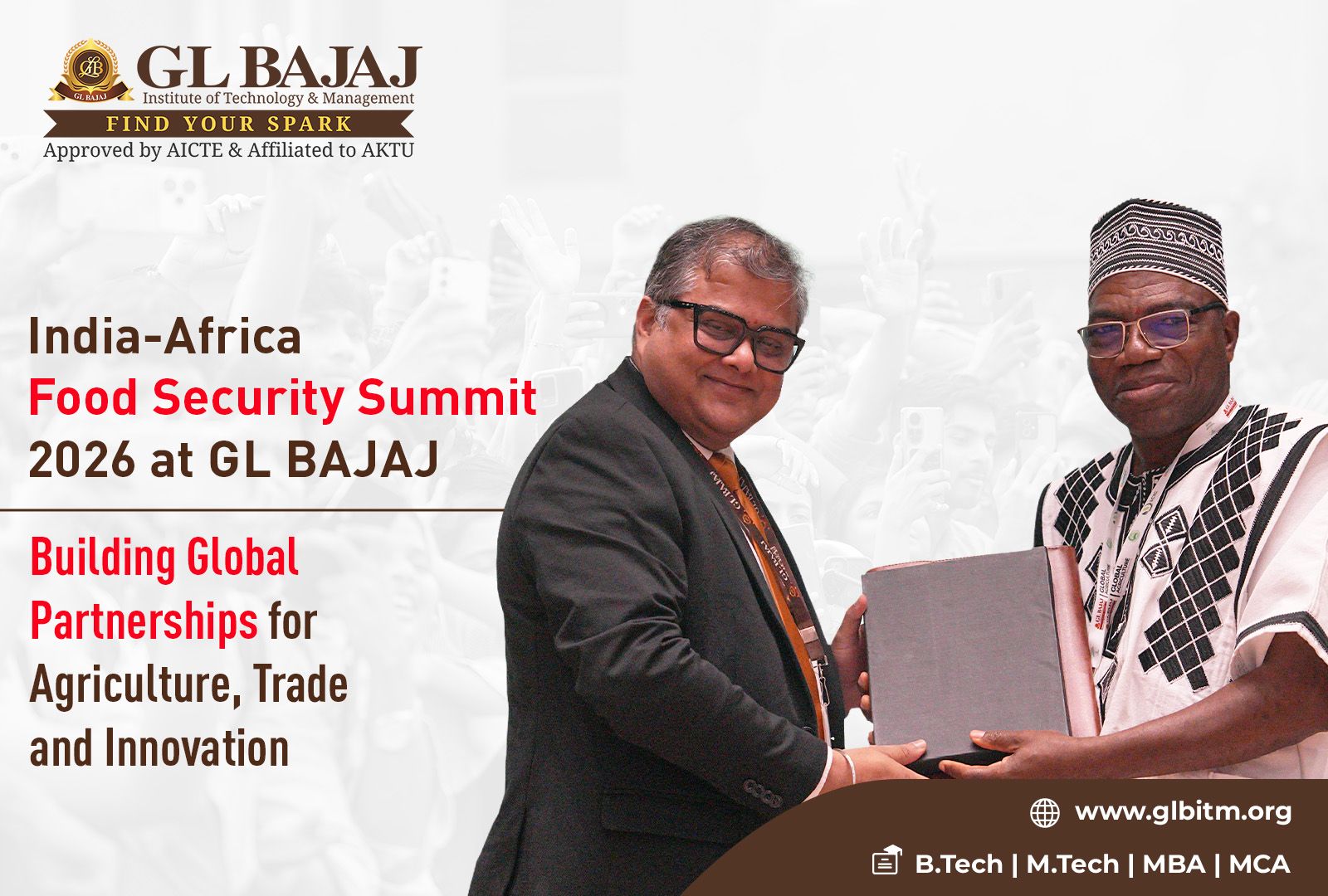
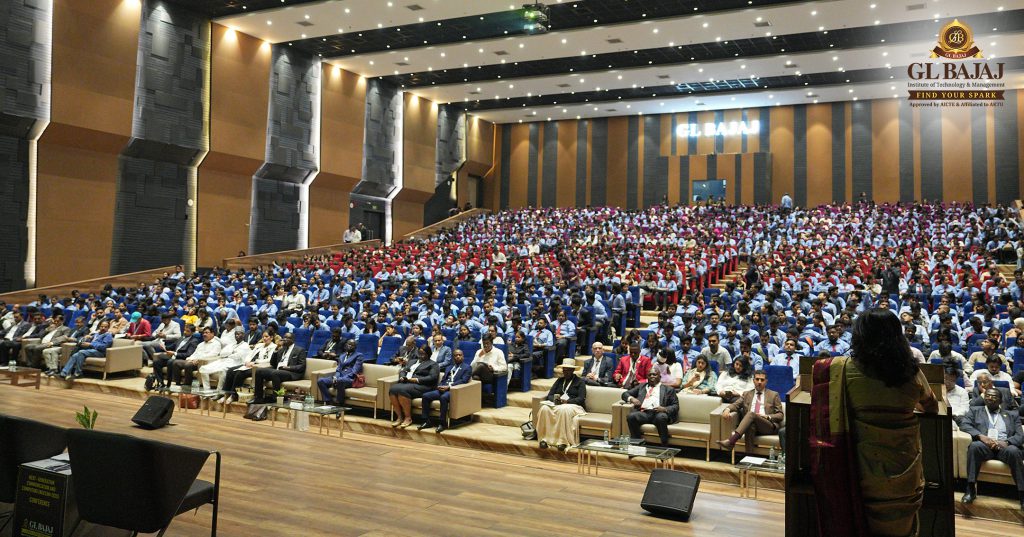
GL Bajaj Institute of Technology & Management hosted the India-Africa Food Security, Agri Trade & Investment Summit 2026, bringing together government leaders, African diplomats, scientists, industry experts and academic stakeholders.
Organised by ITDFC, the summit focused on food security, sustainable agriculture, agri-trade and investment under the theme “Partnering for Prosperity, Nourishing Future Generations.”
As a Best Engineering College in Greater Noida, GL Bajaj allowed students to witness global discussions and understand how education, innovation and international collaboration can address real-world challenges.
GL Bajaj Welcomes India and Africa Under One Roof
The GL Bajaj campus became a meeting point for representatives from India and Africa during the summit.
Government leaders, diplomats, scientists, industry experts, and institutional representatives came together to discuss issues linked with food systems, agriculture, and sustainable growth.
The event created a platform for conversations beyond traditional academic settings.
It brought different perspectives together and highlighted the role of collaboration in addressing challenges related to food security and sustainable development.
For GL Bajaj, hosting the summit also created an opportunity to connect its academic environment with an international platform.
Distinguished Government Leaders Join the Summit
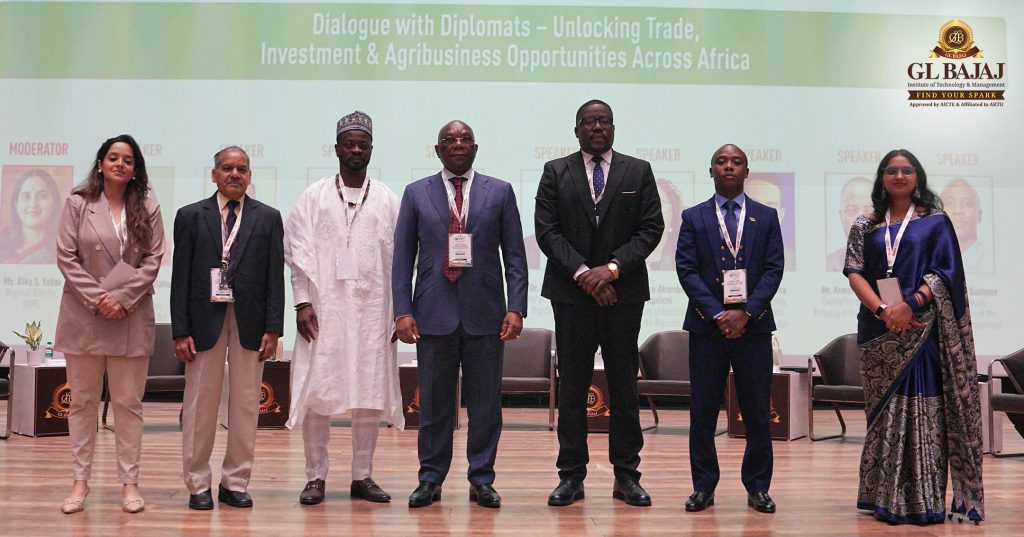
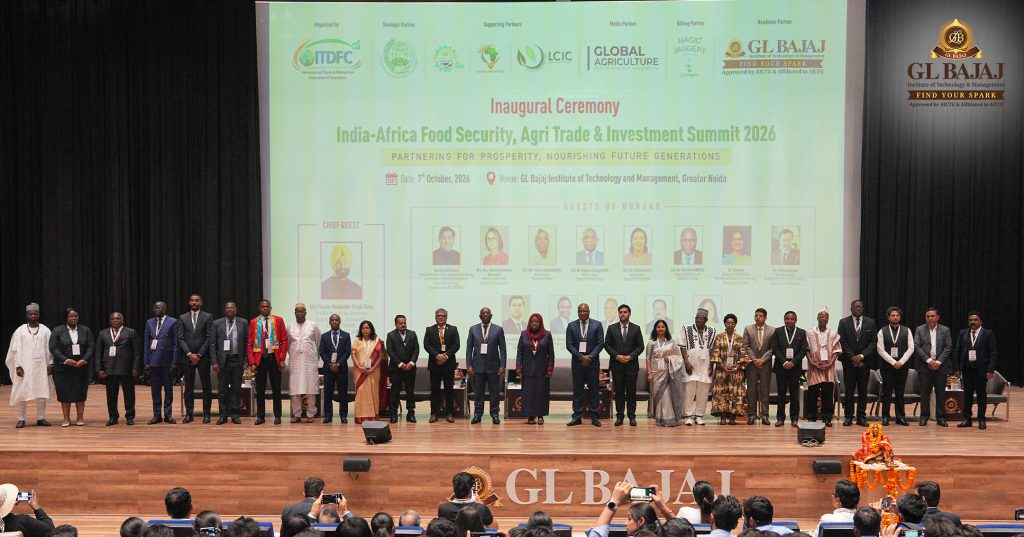
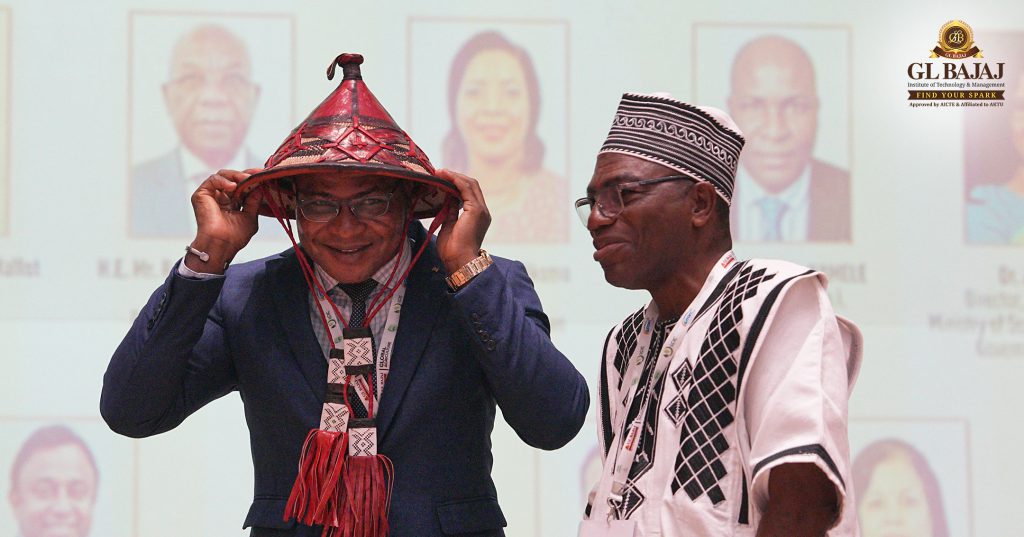
The inaugural ceremony witnessed the presence of distinguished government representatives.
The event also featured Shri Harish Khurana, Member of the Legislative Assembly and Chairman, District Development Committee, Government of NCT of Delhi.
Their presence brought government and policy perspectives to conversations around food security, agriculture, trade and sustainable development.
African Diplomats Bring an International Perspective
The summit also welcomed distinguished diplomatic representatives from African nations.
- H.E. Mrs. Harisoa Lalatiana Accouche, High Commissioner, Republic of Seychelles
- H.E. Mrs. Ildjima Badda Mallot, Ambassador, Republic of Chad
- H.E. Mr. Raymond Serge Balé, Ambassador, Republic of the Congo
- H.E. Dr. Malemda Kamele, Chargé d’Affaires a.i., Republic of Togo
The summit and supported dialogue around India-Africa cooperation in food security, agriculture, trade and investment.
Scientists and Experts Add a Research Perspective
The summit also brought scientific and research perspectives to the discussion.
Dr. Alka Rao, Director, CSIR-IMTECH, Ministry of Science & Technology, Government of India, and Former Chief Scientist, Council of Scientific & Industrial Research (CSIR), Government of India, were among the distinguished experts associated with the programme.
Dr. Renjith C A, Chairman, ITDFC-SITAC Council, also addressed the gathering.
Their participation highlighted the importance of scientific research, innovation and knowledge exchange in developing sustainable solutions for food and agriculture.
Welcomes the Distinguished Guests
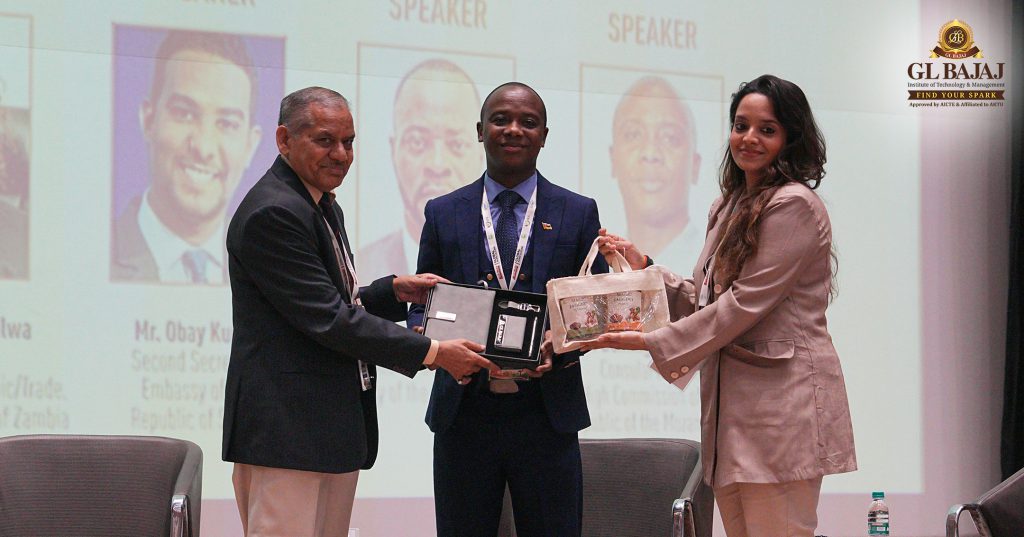
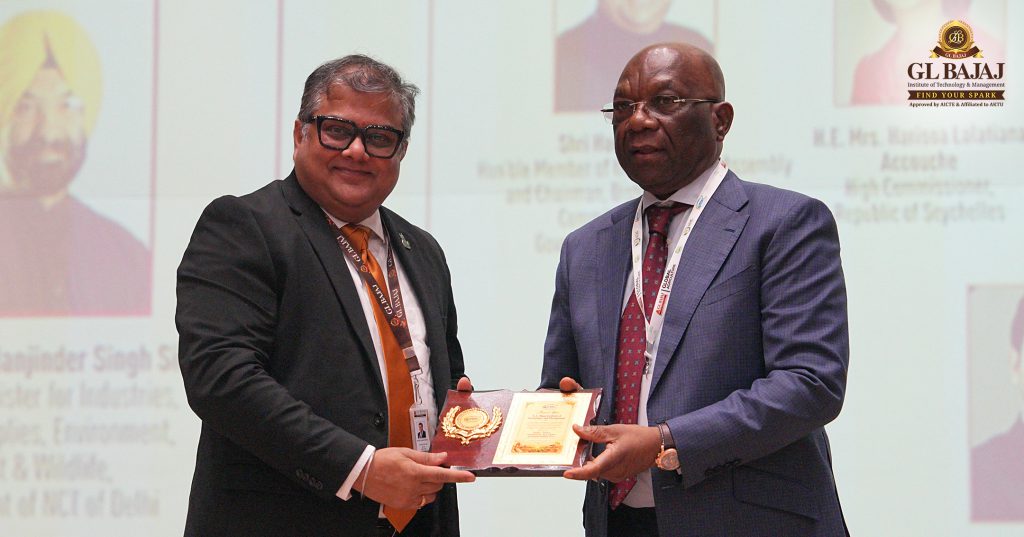
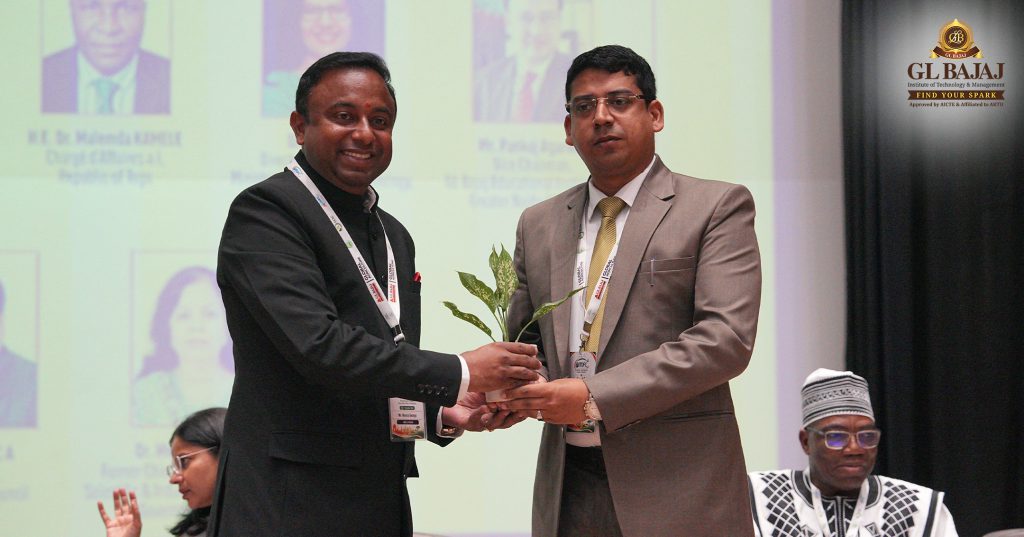
As the academic partner and host venue, GL Bajaj played an important role in welcoming the visiting dignitaries and delegates.
Mr. Pankaj Agarwal, Vice Chairman, GL Bajaj Educational Institutions, Greater Noida/Mathura, delivered the welcome address during the inaugural ceremony.
Mr. Kartikay Agarwal, CEO, GL Bajaj Educational Institutions, Greater Noida/Mathura, was also associated with the summit.
The event also brought together key representatives from ITDFC, including Mr. Syed Areesh Hussain, Chief Executive Officer, ITDFC, Mr. Bency George, Chief Operating Officer, ITDFC, and Dr. Moussa Konaté, Regional Director & Head West Africa, ITDFC.
Their participation reflected the summit’s focus on creating connections between institutions, businesses and stakeholders across India and Africa.
Key Moments from the Inaugural Ceremony
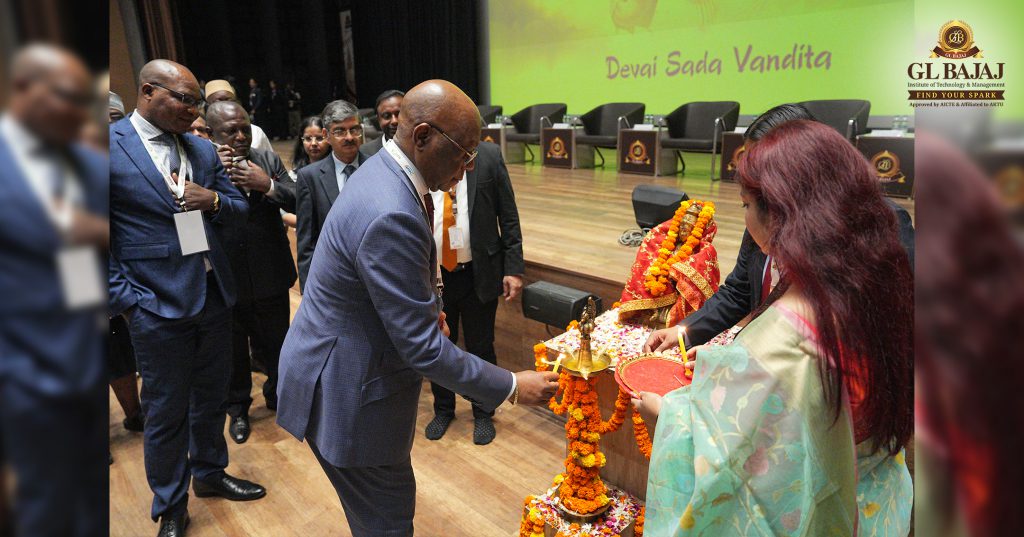
The programme began with the arrival of distinguished delegates, followed by a floral welcome and ceremonial lighting of the lamp.
The opening session included remarks by Ms. Sunandita Kanjilal, Vice President Global Relations, ITDFC, followed by the welcome address by Mr. Pankaj Agarwal and the Chairman’s address by Dr. Renjith C A.
A special video presentation on “The Global Food Security Landscape & India-Africa Opportunities” set the context for the discussions.
The programme then moved towards theme-based discussions, special addresses and diplomatic perspectives from representatives of African nations.
The Chief Guest also addressed the gathering, bringing attention to the importance of cooperation across sectors connected with food, agriculture and sustainable development.
Food Security and Sustainable Agriculture Take Centre Stage
Food security was one of the key themes of the summit.
The discussions highlighted how food security is connected with several areas, including sustainable agriculture, technology, trade, investment and innovation.
For countries looking to build stronger food systems, collaboration can support the exchange of knowledge, ideas and practices.
The summit provided a platform to discuss these areas from Indian and African perspectives.
The theme “Partnering for Prosperity, Nourishing Future Generations” reflected the focus on creating sustainable pathways for future generations.
India-Africa Collaboration Takes Centre Stage
The summit also highlighted the importance of stronger India-Africa connections.
India and African nations have opportunities to collaborate across several areas linked to agriculture and economic development.
Platforms such as this summit can help bring policymakers, businesses, researchers and institutions together.
- Food security
- Sustainable agriculture
- Agri-trade
- Investment
- Innovation
- Knowledge exchange
- Institutional collaboration
The focus was not only on present opportunities but also on building connections that can support future cooperation.
Strategic MoUs Strengthen Institutional Collaboration
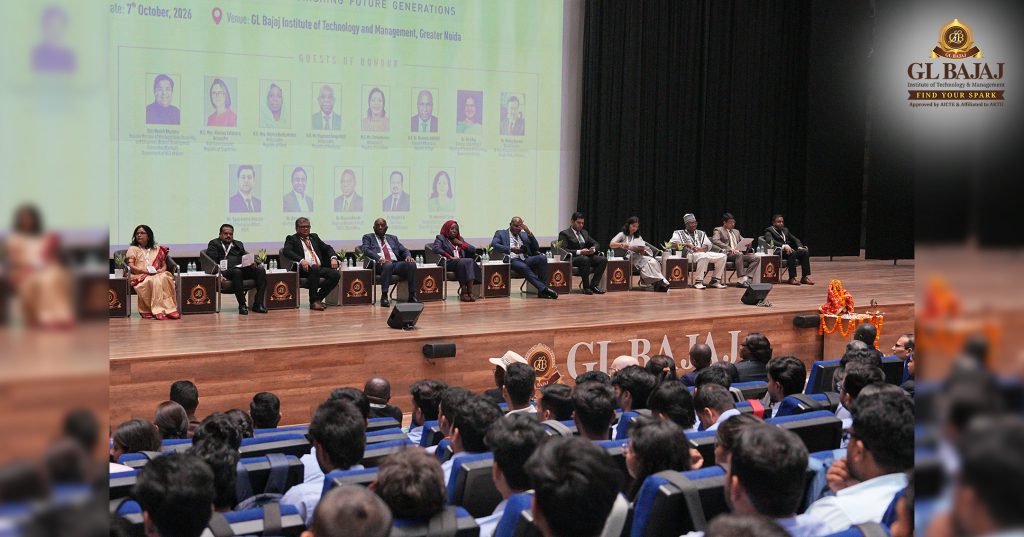
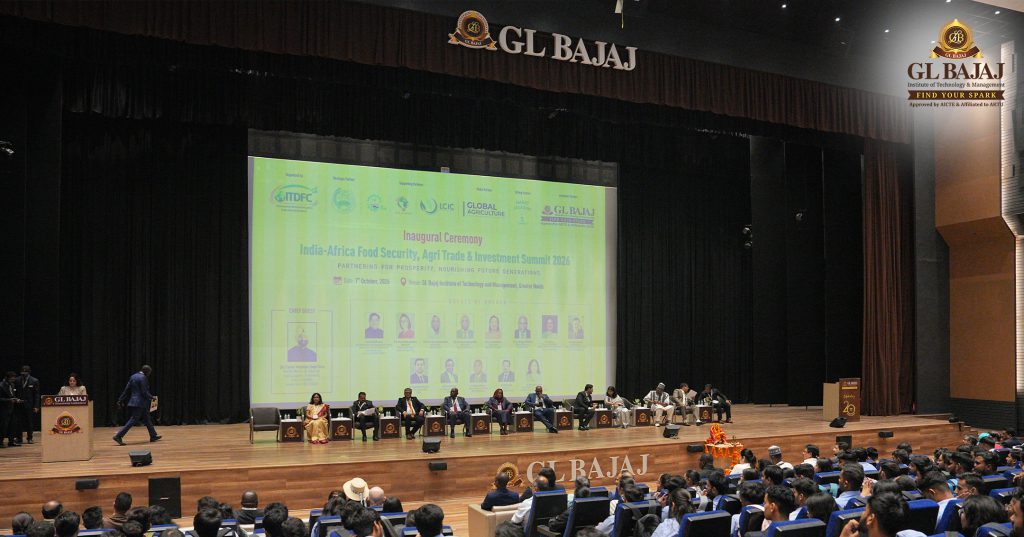
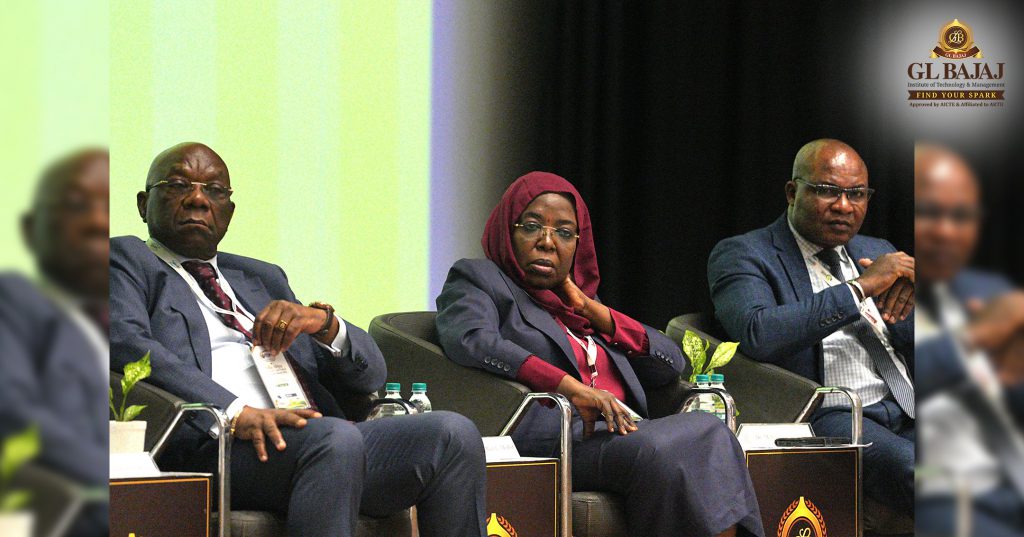
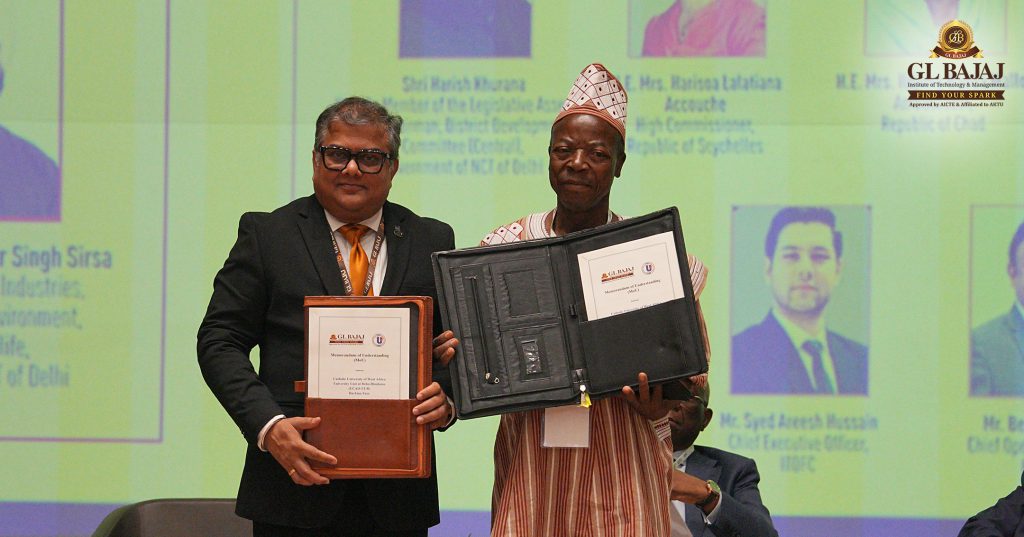
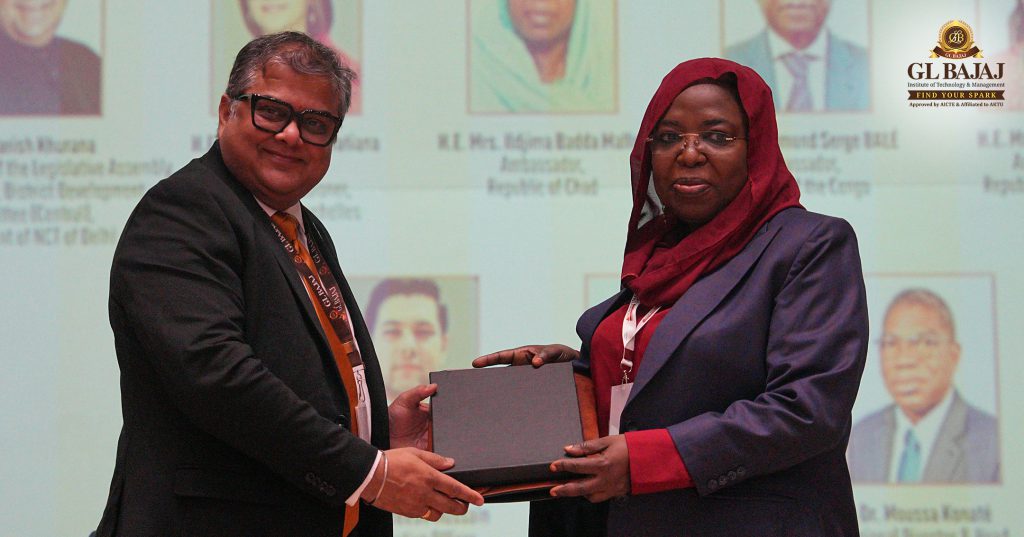
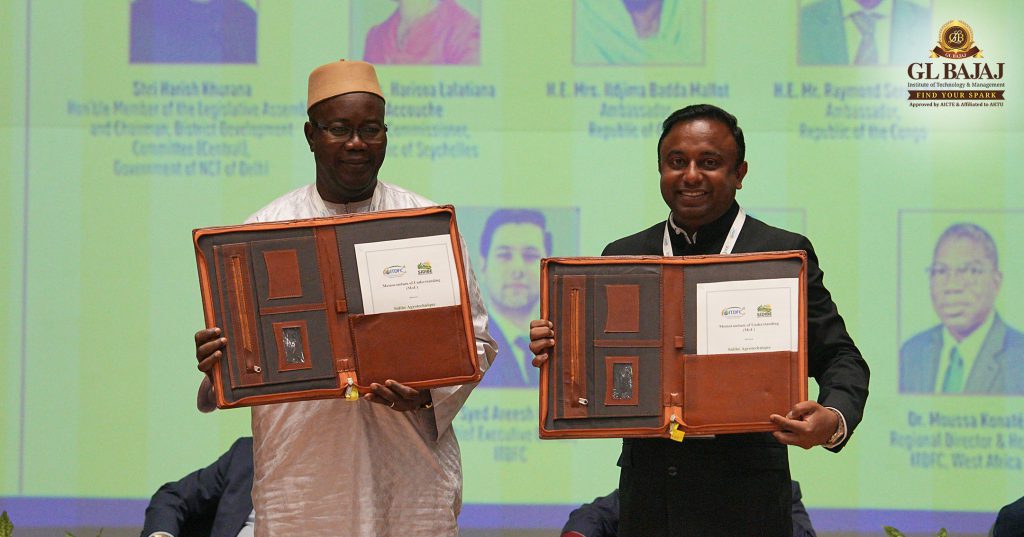
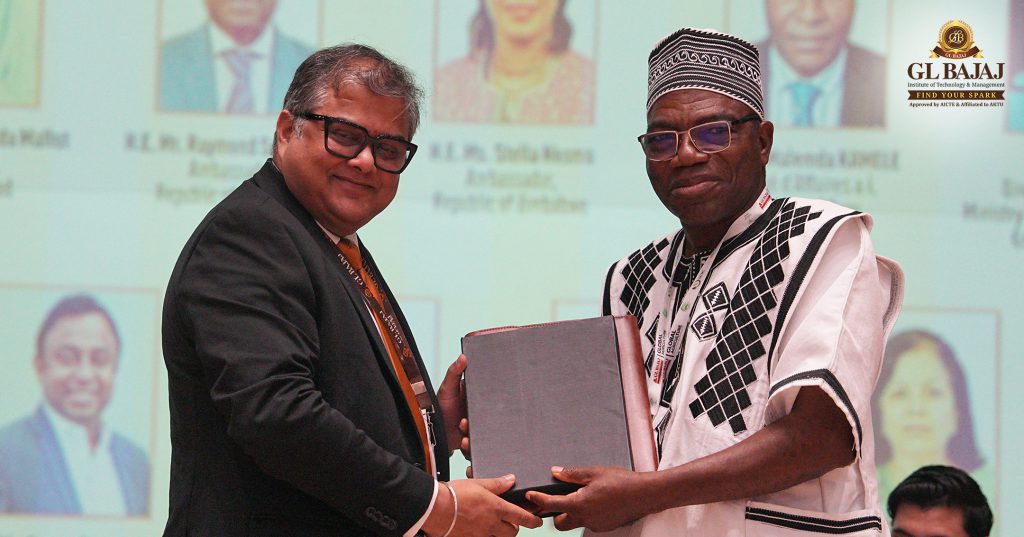
Another important part of the inaugural programme was the MoU signing ceremony between ITDFC and partner institutions and organisations.
The signing created a platform for institutional collaboration and future engagement.
Such partnerships can support knowledge exchange, professional connections and opportunities for stakeholders working across different sectors.
The MoU ceremony also added an action-oriented element to the summit, moving conversations towards potential future collaborations.
Asia-Africa Seed Trade and Innovation Summit 2027 Launched
The inaugural ceremony also marked the launch of the Asia-Africa Seed Trade and Innovation Summit 2027.
The initiative adds another dimension to conversations around agriculture, seed trade and innovation.
As agriculture continues to evolve through technology and research, discussions around seeds, productivity and sustainable practices can play an important role in future food systems.
The launch also reflected the wider focus of the summit on building long-term connections between Asian and African stakeholders.
ITDFC Country Connect Flagship Program Unveiled
The ITDFC Country Connect Flagship Program was also unveiled during the programme.
The initiative formed part of the summit’s wider focus on strengthening international connections.
By bringing institutions, businesses and stakeholders closer, such platforms can help create opportunities for dialogue and future partnerships across countries.
How the Summit Created Learning Opportunities for Students
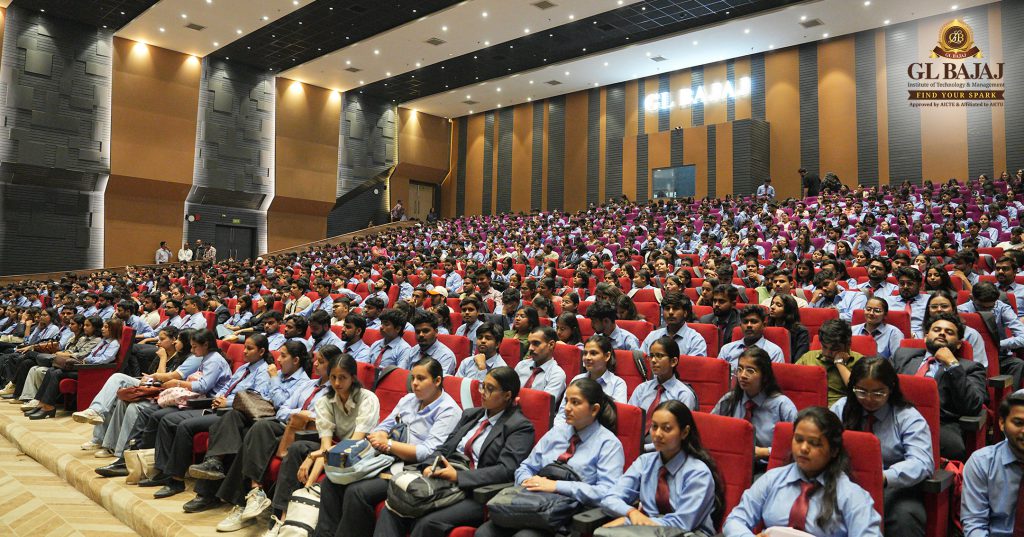
For GL Bajaj students, the summit offered learning that extended beyond regular classroom sessions.
Being around government leaders, diplomats, scientists and industry professionals gave students an opportunity to observe how global issues are discussed at a professional level.
The conversations around food security, sustainable agriculture, trade, investment and innovation also showed students how different fields can come together to address real-world challenges.
Exposure to Global Perspectives
Students got an opportunity to see how India and African nations can work together on shared challenges.
Such exposure can help students understand international collaboration and the role of different sectors in development.
Learning Beyond the Classroom
The summit created a space where students could connect academic concepts with real-world discussions.
Topics such as sustainability, technology, business and international trade showed how classroom learning can connect with wider professional opportunities.
Inspiration for Future Innovators
Interactions with experienced professionals and experts can encourage students to think about new ideas and solutions.
For engineering students, these conversations can also highlight how technology and innovation can contribute to areas such as agriculture, sustainability and food security.
Building Communication and Professional Confidence
Events involving international delegates also give students exposure to professional communication, networking and formal interactions.
Such experiences can help students become more confident when engaging with industry leaders, researchers and professionals.
For students, the summit was more than an event to attend.
It was an opportunity to see how ideas, education and global collaboration can come together to address real-world challenges.
How Global Events Add Value to Engineering Education
Modern engineering education goes beyond technical subjects.
Students also need opportunities to understand real-world challenges, communicate with professionals and explore how technology can support different sectors.
International events can help students develop a broader view of their field.
They can learn how engineering connects with areas such as sustainability, agriculture, business, policy and international development.
For students exploring the Best Engineering College options in Greater Noida, such exposure can be an important part of the overall academic experience.
GL Bajaj Connects Academic Learning with the Real World
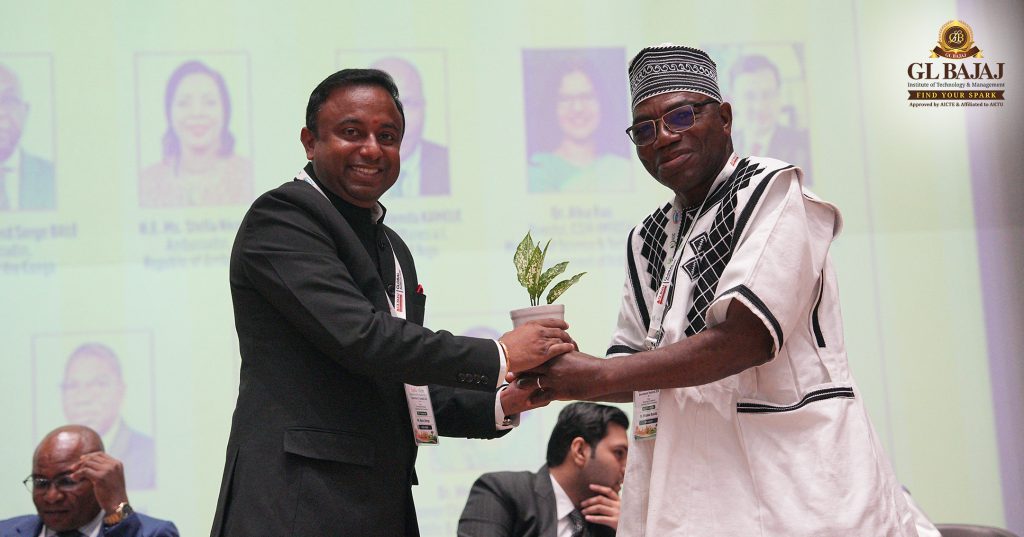
The summit also reflected GL Bajaj’s approach towards creating learning experiences beyond regular classroom teaching.
As an AICTE-approved and AKTU-affiliated institution, GL Bajaj Institute of Technology & Management provides students with opportunities across academics, innovation, research, industry interaction and professional development.
Hosting an international summit added another layer to this environment by bringing global voices directly to the campus.
For students comparing the Best Engineering College options, exposure to such academic and professional interactions can offer valuable learning beyond textbooks.
Key Takeaways from India-Africa Food Security Summit 2026
The summit highlighted several important themes:
- India-Africa collaboration can create opportunities for knowledge exchange.
- Food security remains closely linked with sustainable agriculture.
- Innovation and technology can support future agricultural solutions.
- Trade and investment are important parts of agricultural growth.
- Diplomatic and institutional connections can support long-term collaboration.
- MoUs can create platforms for future institutional engagement.
- The Asia-Africa Seed Trade and Innovation Summit 2027 was launched.
- The ITDFC Country Connect Flagship Program was unveiled.
- Students received exposure to global conversations beyond the classroom.
Wrapping Up
The India-Africa Food Security, Agri Trade & Investment Summit 2026 brought together government representatives, diplomats, scientists, industry professionals and academic stakeholders at GL Bajaj.
The summit created a platform for conversations around food security, sustainable agriculture, trade, investment and international collaboration.
For GL Bajaj students, it also provided a chance to observe global discussions and connect academic learning with real-world challenges.
More than a gathering of distinguished guests, the summit showed what can happen when education, innovation and international collaboration come together.
At GL Bajaj, the spark does not stop at the classroom. It can travel across industries, ideas and borders.
